I’ve been sitting with this image for a while.
Not scrolling past it. Not screenshotting it for later.Just… stopping.
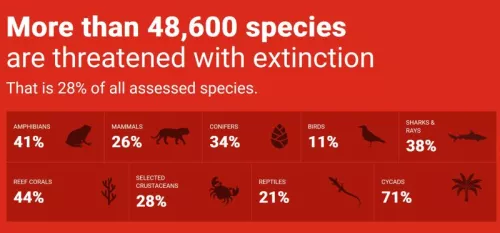
More than 48,600 species are threatened with extinction.Twenty-eight percent.
I read the sentence once. Then again.And then my eyes drifted not to the headline, but to the red.So much red.
It feels less like information and more like a warning lamp that refuses to turn off.
The Numbers Don’t Shock Me Anymore. And That Worries Me.
I wish I could say the numbers startled me.
But they didn’t.They landed with a dull weight instead.
Forty-one percent of amphibians.Seventy-one percent of cycads.Almost half of the reef corals.
I’ve seen variations of these figures before, in reports, presentations and carefully designed slides. What unsettles me now is not the scale alone, but how familiar this language of loss has become.
When did percentages replace grief?
When did extinction start sounding like a statistic instead of an ending?
I Start Thinking About Absence Instead of Species
The image lists categories: amphibians, mammals, birds, sharks, and conifers.
But my mind doesn’t picture groups. It jumps to gaps.
A wetland that no longer hums in the evening.A coastline quieter than it remembers being.A forest that looks intact but feels hollow.
Extinction, I realise, is not always dramatic.Sometimes it is a long, unremarkable silence settling in.
The Red Isn’t Just About Risk
This image is soaked in red urgency, alarm, and danger.
But the red also feels like something else.
Responsibility.
It asks an uncomfortable question without spelling it out:At what point does knowing become complicity?
Because once you’ve seen this you can’t unknow it.
I Notice Which Numbers Make Me Pause Longer
I keep stopping at cycads. Seventy-one percent.
Plants older than most of our ideas of civilisation are now clinging to survival.I imagine time folding in on itself, millions of years undone in a handful of decades.
And amphibians. Always amphibians.
Creatures that breathe through skin. That trust water. That assumes balance.
They are telling us something.They have been telling us for a while.
This Isn’t About the Future
What this image makes painfully clear is that this is not a story about what might happen.
This is now.
Not a distant collapse, not a speculative model.A present condition we are learning to live alongside.
And maybe that’s the most dangerous part, how easily catastrophe blends into the background once it becomes routine.
I Don’t Know What the Right Response Is
I don’t have a neat conclusion.
No checklist. No call framed as optimism.
All I have is this discomfort, this refusal of the image to let me be neutral.
Maybe that’s enough for now.
To sit with the numbers.To let them interrupt our scrolling.To allow them to rearrange how we see the everyday landscapes we move through.
Because extinction begins long before the last individual dies.It begins when disappearance stops startling us.
And this image, in all its red insistence, is asking us not to look away just yet.
🌻
Dr. D
Image credit: IUCN
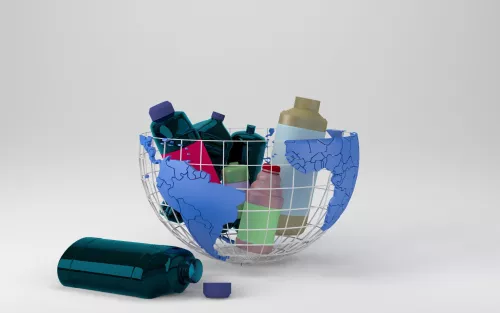
With the increasing problem of waste management, recycling is the best way to minimize the effects of the world’s pollution. Governments across the globe are now increasing their recycling efforts to help cut waste, save resources, and fight pollution. The best practices in recycling range from top-notch approaches and strategies to grassroots initiatives and thus the most successful recycling programs present useful lessons for the countries that seek to enhance their performance in waste management. In this blog, we will look at some of the most successful cases of recycling programs around the globe and how we can apply these experiences for making the world a better place to live in terms of environmental conservation.
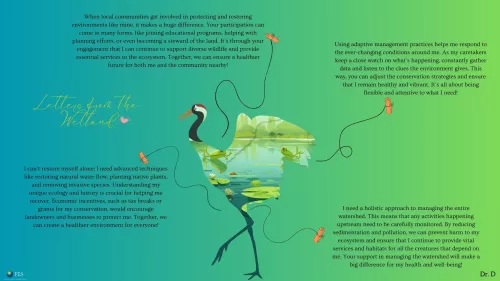
Once upon a time, in the heart of a vibrant and diverse land called Bharat, there existed a precious treasure known as the Wetlands. They were a mosaic of life, with shimmering waters reflecting the clear blue skies, tall grasses swaying gently in the breeze, and lotus flowers blooming in vibrant hues of pink and white. Birds, from the majestic herons to the playful kingfishers, made their homes among the reeds. Fish darted through the clear waters, and frogs croaked harmoniously. They provided a home for countless creatures, purified the water, and protected the land from floods. Their beauty and importance were undeniable.
Nothing could go wrong with them however they had their anguish, these Wetlands were like everyone's baby—cherished, admired, and essential to the well-being of the entire kingdom and despite their significance, the Wetlands were not mothered well. The people of the kingdom often took them for granted. They marvelled at the lush greenery and the vibrant life that thrived within, but they failed to nurture and protect these delicate ecosystems. Pollution, encroachment, and neglect began to take their toll.
Factories along the riverbanks released toxic chemicals into the waters, turning them murky and harmful to aquatic life. Plastic waste and other debris clogged the waterways, suffocating the plants and animals that depended on the Wetlands for survival. Urban development encroached upon these natural sanctuaries, reducing their size and disrupting the delicate balance of the ecosystem.
The Wetlands cried out for help, their once-clear waters turning murky and their vibrant flora and fauna struggling to survive. The wise elders of the kingdom knew that something had to be done. They gathered the people and shared stories of the past, reminding them of the Wetlands' crucial role in their lives.
Upon hearing the cries for help, the King took action and summoned his most respected ministers and strategists. Together, they sought innovative solutions to support and restore the wetlands. As news of their efforts spread, researchers and environmentalists began to take note of the wetlands, conducting studies and raising awareness about their importance. This increased attention brought a renewed sense of hope for the wetlands, inspiring the community to rally together for their protection and restoration.
The wetlands once brimmed with hope, but that light began to fade as the king grew consumed by his other duties. The ministers, too, drifted back to their routines, and one by one, they abandoned the wetlands, leaving them alone and forgotten. Occasionally, a kind soul would wander into the wetlands, heart heavy with compassion, determined to help. Reports of their plight were documented, yet those words faded into the void, lost and unheeded, as the wetlands waited in vain for the care and attention they so desperately needed!
They are still waiting for someone to read the reports and take meaningful action based on their findings. The empty promises and words of reassurance are no longer sufficient to address their concerns. Without prompt intervention, their situation remains unchanged, and the urgency for real solutions continues to grow.
Happy International Wetland’s Day 2025!
🌻
Dr.D